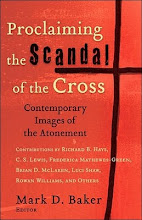
Monday, June 17, 2013

Ordinary Time - The Scent of Forgiveness


One of the Pharisees asked Jesus to eat with him, and he went into the Pharisee’s house and took his place at the table. And a woman in the city, who was a sinner, having learned that he was eating in the Pharisee’s house, brought an alabaster jar of ointment. She stood behind him at his feet, weeping, and began to bathe his feet with her tears and to dry them with her hair. Then she continued kissing his feet and anointing them with the ointment. Now when the Pharisee who had invited him saw it, he said to himself, “If this man were a prophet, he would have known who and what kind of woman this is who is touching him—that she is a sinner.” Jesus spoke up and said to him, “Simon, I have something to say to you.” “Teacher,” he replied, “Speak.” “A certain creditor had two debtors; one owed five hundred denarii, and the other fifty. When they could not pay, he canceled the debts for both of them. Now which of them will love him more?” Simon answered, “I suppose the one for whom he canceled the greater debt.” And Jesus said to him, “You have judged rightly.” Then turning toward the woman, he said to Simon, “Do you see this woman? I entered your house; you gave me no water for my feet, but she has bathed my feet with her tears and dried them with her hair. You gave me no kiss, but from the time I came in she has not stopped kissing my feet. You did not anoint my head with oil, but she has anointed my feet with ointment. Therefore, I tell you, her sins, which were many, have been forgiven; hence she has shown great love. But the one to whom little is forgiven, loves little.” Then he said to her, “Your sins are forgiven.” But those who were at the table with him began to say among themselves, “Who is this who even forgives sins?” And he said to the woman, “Your faith has saved you; go in peace.” (Luke 7:36-50)


Simon the Pharisee doesn’t appear to have just a friendly interest in Jesus. He’s a bit suspicious about him, and his concerns crystalize when the scandalous woman shows up invited.

Wealthier citizens in that time would keep their homes open—at least the outside patios—so that people could drop in and pay their respects, get counsel, or beg for alms. Simon probably didn’t expect that a prostitute would show up. A whore would be the worst of the unclean sinners (right along with lepers), and someone as respectable and religiously correct as Simon wouldn’t want any of her sin to get on him (ritually or literally).

But Simon feels that it’s acceptable for him to be in the company of Jesus. Jesus might be a spurious prophet, but he’s a religious type, and Simon has a responsibility to make sure that newcomers to the work of religion get vetted.

It appears that the woman also feels that it’s acceptable for her to be with Jesus, but for different reasons. Somewhere along the way she has come to understand something deep about him, something that has changed her life. She has no need to approve or vet him. She has come to love him, as she has been loved.

Simon, of course, is scandalized that Jesus allows the woman to even come near him. Jesus might have scandalized Simon even further by not only affirming her devotion over that of the Pharisee’s, but also by declaring their common need for forgiveness. The idea that he would share such common ground with a prostitute must have troubled Simon. I wonder what he thought of Jesus’ prophetic powers when he heard that.

Jesus would eventually go on his way, his stomach satisfied, but the details of the meal forgotten. But he would not be able to forget the woman any time soon. The ointment that she poured on his feet—a perfume that was very likely a tool of her trade, a scent that she had been using to allure men to her bed—would stay with Jesus for quite some time. The aroma of forgiveness would emanate from him, maybe even to the moment of his death.

Simon didn’t want the woman’s sin anywhere near him. Jesus carried the woman’s touch to the cross.

Jesus—Friend of Sinners.

Friday, June 14, 2013

Ordinary Time - Is Jesus still weeping?


As [Jesus] came near and saw the city, he wept over it . . . (Luke 19:41)


One of the things that evangelical Protestants lack is geographical specificity. Other religious groups have centers: Roman Catholics have Rome; Orthodox Catholics have Constantinople; Muslims have Mecca; Jews have Jerusalem. Evangelical Protestants are, by and large, decentered. We have no holy city, no particular place of pilgrimage. Some might say, in a theological sense, that we are, as a scattered people, God’s own dwelling, and we need no earthly city to give us an identity.

So, it’s possible that Jesus occasionally stops and weeps over Rome, Constantinople, Mecca, and Jerusalem. It could be that those cities are occasionally washed in his tears.

And maybe he pauses now and again to weep over us.

In Luke’s story, right after Jesus’ time of weeping, he went into the Temple and chased out the moneychangers and sellers of animals intended for sacrifice. Yes, these people had turned the Temple courts into a religious strip mall, but they had also wiped out the purpose of those courts: To allow non-Jews to come close to the Temple and engage in worshipping the God of Abraham, Isaac, and Jacob.

In effect, the people of God were eliminating their witness to the world. They had closed their doors to those who should have drawn close to the light that Israel was created to be. They had divorced themselves from their very destiny.

I worry about this. Protestants emerged a few hundred years ago as ones seeking to reform a broken church. Evangelicals emerged later to give their lives to bearing witness to the good news of Jesus Christ.

Now we’re seen by others as more about what we’re against than what we’re for. And I think that Jesus might be weeping.

Our so-called studies in apologetics (the tradition of defending the faith) is more combative than clarifying. Our relationships with people of other religious traditions involves much more accusation than it does mutual understanding. Our response to the surrounding culture, when it seems to offend us, is too often to hunker down and heighten our walls rather than to engage and try to see what God is doing.

I think I would rather have Jesus weeping over a holy city far, far away rather than weeping on me. But I suspect that we are drenched in his tears and don’t even know it. As painful as it might be, maybe Jesus will come along and clear out the rubbish and the drama from our Temple courts and remind us who we were meant to be as the people of God—a people who exist, not for themselves, but for the sake of the world.

If Jesus does that, will we repent and respond? Or will we haul him up on charges of heresy and nail him to a cross again? I don’t want to think too long on the answer to that question.

Lord Jesus, Son of God, have mercy on us.

Thursday, June 13, 2013

Ordinary Time - Does God go with us to Hell?


When he had come near Bethphage and Bethany, at the place called the Mount of Olives, he sent two of the disciples, saying, “Go into the village ahead of you, and as you enter it you will find tied there a colt that has never been ridden. Untie it and bring it here. If anyone asks you, ‘Why are you untying it?’ just say this, ‘The Lord needs it.’” (Luke 19:29-31)


There is some important symbolism going on with the colt in this story. It is a fairly young animal and has yet to be ridden or required to be a beast of burden. Just as the implements of worship in the temple were not given over to common use, so would the colt serve as a pure vessel that would carry Jesus into Jerusalem, where he would first be hailed as the Messiah, and then soon after sentenced to death and crucified.

The symbolism will continue later on when Jesus’ body is laid in a tomb that had never been occupied. Jesus was the first to be laid there.

It might be good for us to think about how Jesus occupies these new, unused places. We go to these kinds of places all the time. We enter into new phases of life, new jobs, new relationships, new challenges, and any number of other new things. We usually believe that we are receiving God’s guidance as we go. But do we think about God actually being present in those new places—even going before us there?

And what if the new place is not a good place? What if it is a self-destructive place?

Years ago a woman in my church told me her story. As a young girl, she had already suffered a number of painful, abusive experiences at the hands of people who should have been protecting her—including people in her church. At age thirteen she made a conscious decision to start drinking and to engage in a lifestyle that could easily lead to her destruction.

On the day that she made her decision, she informed God of her plan. She told me that she heard him say to her, “All right. I’ll go with you.”

She said that, in all the years of drinking heavily and partying hard, she never lost a sense of God’s presence. She didn’t claim to have his approval, but she felt that he had gone with her to this new, destructive place in her life, and had not abandoned her.

As a young adult, she entered into a recovery program and got sober. Her life found some level of harmony and she never lost the sense of God’s presence in her life. She still had a lot of emotional and psychological baggage, and she was aware of that. But she never ceased to marvel that God had not forsaken her, even in her darkest time.

I’ve thought a lot about her story over the years. I know people who have spiraled down into very damaging lifestyles and who were certain that God had turned his back on them. I’m not so sure that’s the case. I doubt that the sins we choose—whether out of deep pain, rebellion, or just plain stupidity—somehow catch God off guard. He’s pretty much seen it all.

The father in the story of the prodigal son (Luke 15) didn’t physically travel with his younger son on his journey to disaster, but in a way his love remained present to the son. And when the son came home, the father was fully prepared to receive him. His love was a continuum that preceded the son’s departure, followed him to the far off land, and gathered him home when he returned. In a very profound way, the heart of the father went with the son into a very dark place. The father’s love accompanied the son as he travelled to Hell.

I don’t recommend the choosing of new places in life that are destructive. Choosing Hell is very unwise. But when we go to those places, we might not be going alone.

Can you imagine such a thing?

Wednesday, June 12, 2013

Ordinary Time - Havine an Identity


Let your steadfast love become my comfort according to your promise to your servant.

Let your mercy come to me, that I may live; for your law is my delight.

Let the arrogant be put to shame, because they have subverted me with guile; as for me, I will meditate on your precepts. (Psalm 119:76-78)


It’s puzzling to imagine why someone would luxuriate in law. In our society, laws are important, and they serve as both protections and boundaries. They bring order and provide a basis for governance.

But laws, in general, do not bring us joy. They are just laws and are often subject to change. We’re glad they’re around, but we don’t really need to think about them all the time.

The psalmist, however, speaks of the Jewish Law lovingly and with devotion. The Law is portrayed as something that brings delight, something that draws the worshipper into meditation.

How can this be? Most of us have some idea of the ancient Jewish Law. It was formed around what we call the Ten Commandments, but there were also many other laws in the Old Testament pertaining to justice, dietary restrictions, and social interactions. We might see devotion to the Law as legalism, something we Christians believe has no hold on us. We see legalism as a bad deal.

But for the ancient Hebrew people, it was probably different. Their ancestors had come out of Egypt where they had been a slave population for generations. Their identity was wrapped up in oppression and servitude, confused and complicated by the religious mythologies of the Egyptians. The Law was, for them, not simply boundaries and restrictions—it was something that formed a new identity for them, an identity as a special people, loved by God, rescued by God, and gathered into a nation so that they would be the light of the world.

Jesus didn’t speak disparagingly about the Law. He said, “Do not think that I have come to abolish the law or the prophets; I have come not to abolish but to fulfill.” (Matthew 5:17) He summed up the entire Jewish Law and the declarations of the ancient prophets of Israel in one word: Love. Love for God, love for others. (Matthew 22:34-40) For followers of Jesus, true identity is found in that love.

People usually get in trouble when they base their identities in some other place or thing. If my identity is my work or my career, then I have to do everything I can to protect it. And when it goes away, I don’t know who I am anymore. If my identity is found in my loneliness, then medicating that pain is my highest priority. If my identity is in a past hurt, then I will forever try to nurture my pain, because without it, I am nothing.

But if my identity is in Jesus, as a broken person loved and redeemed by God, then those other sub-identities have no final hold on my life. Protectionism loses its power. Loneliness can no longer demand acts of adultery or promiscuity. Past offenses remain real, but they can no longer drag us back into a history that is no more, but must release us into a future that comes from the preferences of God.

Everyone has some kind of identity. Ours is in Jesus.

Let your mercy come to me, that I may live; for your love is my delight.

Tuesday, June 11, 2013

Ordinary Time - Reinventing Jesus


I wish you would bear with me in a little foolishness. Do bear with me! I feel a divine jealousy for you, for I promised you in marriage to one husband, to present you as a chaste virgin to Christ. But I am afraid that as the serpent deceived Eve by its cunning, your thoughts will be led astray from a sincere and pure devotion to Christ. For if someone comes and proclaims another Jesus than the one we proclaimed, or if you receive a different spirit from the one you received, or a different gospel from the one you accepted, you submit to it readily enough. (2 Corinthians 11:1-4)


In Genesis chapter one, God creates human beings, “. . . in the image of God he created them; male and female he created them.” And ever since, it seems, we humans have been re-creating God.

It’s been done with statues and idols, stars and planets, pantheons and mythologies. We even do it with Jesus, seeing him as the kinder and gentler version of that crazy, violent, Old Testament God that Jesus called “Father.” Jesus can be reduced down to the low-hurdle version of God, the one who took the heat from the wrathful heavenly Father because of our sins, and now stays God’s hand lest he smite us for our rottenness, destroy of because of our total depravity.

Of course, we need to say that this isn’t right. We’re told in Scripture that, in Jesus, the fullness of God dwells, that he is the Word of God made flesh, that he is the very image of the invisible God. If we really want to know what God is like, then just look at Jesus.

Unless we reinvent Jesus as well.

We do this all the time, you know. Someone has a private revelation and swears that Jesus has given new and secret instructions, and everyone gathers on a hilltop waiting to be whisked away to glory. Others decide that there isn’t enough good work going on in the nation and the world, and they characterize Jesus as the embodiment of their political preferences, wrapping him in a national flag. We decide that he’ll heal everyone of their diseases if they’ll just believe rightly, and we turn him into a capricious wizard. We dismiss the idea that he’ll heal anyone and we make him the vice president of quality control for the American Medical Association.

It’s difficult to reinvent a person you actually know. We can know all about Jesus and project any number of new personalities onto him. But knowing him—really knowing him, as a real person—doesn’t allow for such projections. When Jesus is limited to our interpretations of him through our texts of Scripture, he can become valued and yet abstract to us; he can be one to be imitated, but not necessarily one to know and to follow.

I marvel at how often our appropriate response to the summons of Jesus is simply the acceptance of an invitation.

“Come unto me . . .”

“Come, follow me.”

“Take, eat.”

I wonder, if in our constant struggle to know Jesus by crafting him into images of ourselves, we miss his invitation to come to him, to find rest, to learn new rhythms of living, and to dine with him at his table. We might be surprised at the others who are already gathered there, taking and eating, drinking and following, ones we would have never expected to be invited in the first place. Then we realize that it’s a wonder that even we received an invitation.

And in the midst of our surprise, we might really know Jesus.

Monday, June 10, 2013

Ordinary Time - About Salvation


As [Jesus] approached Jericho, a blind man was sitting by the roadside begging. When he heard a crowd going by, he asked what was happening. They told him, “Jesus of Nazareth is passing by.” Then he shouted, “Jesus, Son of David, have mercy on me!” Those who were in front sternly ordered him to be quiet; but he shouted even more loudly, “Son of David, have mercy on me!” Jesus stood still and ordered the man to be brought to him; and when he came near, he asked him, “What do you want me to do for you?” He said, “Lord, let me see again.” Jesus said to him, “Receive your sight; your faith has saved you.” Immediately he regained his sight and followed him, glorifying God; and all the people, when they saw it, praised God. (Luke 18:35-43)


In some Christian circles, salvation is an act of precision. The requirements are often made clear—the prayer must be specific, the confession sufficiently sincere, the understanding adequately orthodox, the membership in the community of faith prompt and participative.

In the Bible, however, salvation is often quite a sloppy event. Jesus, in particular, who you think might know better, often brought healing to people and forgave their sins, getting in trouble with all the local religious stakeholders. Jesus didn’t seem overly concerned about religious specificity when it came to salvation.

The blind man had limited sensory resources. He must have heard about Jesus at some point, because he referred to him in a way that suggested prior knowledge. He couldn’t find his way to Jesus as he passed by, so he used his voice and called out. The only thing close to a confession of faith that the man could offer was an acknowledgement of Jesus’ kinship with the great Israelite king, David. The man’s only request was that he would regain his sight.

Luke doesn’t describe a scene that is heavy with process. There aren’t any interviews conducted, no theological exams, no huddles with Jesus and his disciples to see if the man is worthy of a healing touch. Jesus just does it. The man’s sight is restored faster than you can Tweet what you had for breakfast today.

There is, however, a qualifier. Jesus says that the man’s faith saved him, but he makes that declaration after he commands the healing to take place. The man had faith in Jesus, trusted him to be able to restore his life to him. Without sight, the man had become a helpless beggar. With his sight restored, he could re-enter the society that had marginalized him. He trusted that Jesus could do that for him. And it seems to have been enough.

It’s interesting that Jesus didn’t say, “Your faith has resulted in your eyes getting fixed.” Instead, he says that the man has been saved, he has been rescued. For the formerly blind man, salvation was not merely theological or positional or eschatological. It was existential. It had immediate effect in his life and would launch him into a whole world of restoration.

The man became a saved person because of his faith in Jesus, yet it was a faith that was not grounded in doctrines or creeds. For that matter, it wasn’t grounded in belief in Jesus’ death, resurrection, or any of the things that would happen later. It was grounded only in the person of Jesus, and in his authority to make all things right.

Our doctrines and creeds are important to us because, on this side of history, they tell us about our own story, a story that emerges from Scripture and the long-standing (and sometimes wrong-headed) traditions of the Christian Church. But untethered from the real person of Jesus—not just the memory of Jesus, but the true, living presence of Jesus—they’re just another set of religious boundaries, embraced not by faith, but by personal preference.

The formerly blind man and the people in the crowd had the right response to this act of healing. They glorified God and praised him. They seemed to understand right away that this was God at work through this wandering prophet named Jesus. If salvation came along, then God’s fingerprints had to be there.

Lord, let me see again.

Friday, June 7, 2013

Ordinary Time - a reflection on solidarity


[Jesus] also told this parable to some who trusted in themselves that they were righteous and regarded others with contempt: “Two men went up to the temple to pray, one a Pharisee and the other a tax collector. The Pharisee, standing by himself, was praying thus, ‘God, I thank you that I am not like other people: thieves, rogues, adulterers, or even like this tax collector. I fast twice a week; I give a tenth of all my income.’ But the tax collector, standing far off, would not even look up to heaven, but was beating his breast and saying, ‘God, be merciful to me, a sinner!’ I tell you, this man went down to his home justified rather than the other; for all who exalt themselves will be humbled, but all who humble themselves will be exalted.” (Luke 18:9-14)


This story that Jesus tells is usually seen as one that contrasts legalism and humility, and clearly that contrast is evident. But I’m seeing something in addition to that as I read this text on this morning in Ordinary Time.

I’m seeing solidarity.

The Pharisee has separated himself (“standing by himself”) from others in the Temple. He sees himself as one who is not part of the gathering of people in this Jewish place of worship (“I thank you that I am not like other people”). He does all the right things and he is not to be counted among the sinners, or so he thinks.

The tax collector also seems to be standing alone, but out of shame rather than out of arrogance. He addresses the reality of his life to God, and Jesus claims that the man goes to his home as one who is “justified”—a man changed from unrighteousness to righteousness, one who has been made right with God.

Jesus says that the Pharisee, however, did not find justification. The man claimed to be separate from his list of sinners, but he was wrong—he was one of them. In physically and legalistically isolating himself from those he believed stood outside of God’s favor, he had failed to realize that he, too, had missed the mark. He was actually standing in solidarity with those he had condemned.

Recognizing that solidarity allowed the tax collector to see himself honestly and cast himself before God’s grace and mercy, leaving the Temple as one who had been embraced by God. But he would still understand the truth about himself and his complicity with the rest of the world.

I think a lot these days about the issues that deeply impact and divide both the US church and the nation in general—issues like same-sex marriage and immigration reform. I wonder how the conversations would change if we in the church started, not with our own righteousness and justification, assuming that because we are heterosexual or because we enjoy citizenship because of an accident of birth, but with honest confession before God, that we are sinners on our knees before our merciful God.

It might be even better to do that while kneeling next to a gay couple and an undocumented worker and her family.

God, be merciful to me, a sinner.

Thursday, June 6, 2013

On Beauty - A Reflection for Ordinary Time


The mighty one, God the Lord, speaks and summons the earth from the rising of the sun to its setting. Out of Zion, the perfection of beauty, God shines forth. (Psalm 50:1-2)


I love to visit the eastern Sierras in California. The air is clean and the views are dramatic. The beauty is sometimes breathtaking, and it always seems to fill something within me that I didn’t know was empty.

I’ve hiked with friends in those mountains who would stop occasionally and declare their amazement at God’s handiwork. They see God’s fingerprints everywhere, and they have no doubt that they are witnessing the effects of the Creator’s artistic touch.

It doesn’t quite work that way for me. I look at the rugged mountains, the expansive valleys, the pristine lakes, the lovely and aromatic trees and shrubs, and I think about ancient earthquakes and volcanoes, massive glaciers and millennia of corrosive activity. I even imagine how people’s appreciation of the landscape would change if they were lost in those mountains and facing a cold and lonely night, with only bears to keep them company.

I used to be troubled at my apparent lack of theological reflection about God’s creative work in nature. I wondered if I was secretly and unconsciously an unbeliever (maybe some of my Reformed friends were right, and double predestination was a reality, and I was on the wrong side of election but didn’t know it!). Maybe one of my atheist friends could point out that I had discovered what had already been apparent to others—nature is just nature, and you can’t prove God by its wonder and beauty.

They’re probably right, those atheists. You really can’t prove God just by looking at nature. But here’s the catch: Isn’t it a wonder that we can stand in those places and be overwhelmed by something we identify as beauty? What is it within us that characterizes a rugged, ancient landscape as beautiful? Do the wild animals pause every so often to enjoy the amazing views? Or do they just function there, looking for something to eat and a place to sleep? We might understand how something huge and overwhelming would produce a feeling of awe, but how does beauty do that?

I may have trouble clearly identifying the effects of a glacier with the hand of God, but I’m coming to marvel at the fact that we all seem to have a capacity for beauty in the first place. Beauty may be in the eye of the beholder, but my ability to appreciate things that are beautiful gives me pause.

For me, the fingerprints of God are there.

Wednesday, June 5, 2013

A Scout is . . .


I am troubled about the recent news stories surrounding the Boy Scouts of America (BSA) organization’s ruling to allow openly gay boys to become scouts, in effect overturning a ban on gay membership. There are two things that trouble me.

First, BSA is open to boys as young as seven years old (Cub Scouts). A boy can enter the ranks of the Boy Scouts at age eleven (that’s when I joined up). The levels of cognitive, social, moral, physical, and sexual development are all over the map when you get boys (girls also, but boys are my topic today) of varying ages together.

I get concerned when developmental labels are put on children while they are still in the process of developing. My guess is that most boys join the Boy Scouts (or move from the Cub program) at the younger ages of eligibility. I wonder how many 11-13 year olds have sufficiently moved through their developmental stages so that a label of sexual orientation can be placed on them?

I do not object, however, to the lifting of the ban. Young boys (and adolescents) are working through many complex developmental issues all at once. It seems appropriate to me to open membership to boys in general rather than attempting to encourage categorizations about sexual orientation that may be premature.

If there is a concern about sexual behavior among scouts, it would be a mistake to assume that having a ban on homosexual membership would stop that from happening in the first place. In his book Surprised by Joy, C. S. Lewis talks about the sexual domination of younger boys by the older boys in the boarding school where he lived. Boys get into these kinds of shenanigans all the time. It’s not a good thing, but it’s also not a new thing.

My other concern is about the very loud and vocal exodus out of the BSA by very conservative Christian groups. I am troubled when Christians extract themselves from the world and create competing organizations. I recognize that there are times when extraction may be appropriate, but I’m not convinced that this is one of those times.

The subtle message that leaks through the reaction to the BSA’s ruling is that there are certain kinds of people that are outside the scope of Christian ministry and care. Perhaps there is even the implication that there are people out there who stand outside the possibility of God’s redemptive love (unless, of course, that they get their acts together—can I please hear my Reformed friends reminding us, “By faith alone!”?) This is, in my view, a problematic message that is being given to the world.

Not all things that happen in our culture should be embraced—I get that. But there needs to be deeper reflection taking place than simply drawing a hasty line in the sand and creating competing subcultures that make Christians appear both irrelevant and ineffective.

[a personal note: I was only in the Boy Scouts for a year. But, to this day, I can quote the BSA oath and the 12-points of the Scout Law. I can’t remember where I left my car keys, but I remember all of that. I guess it’s an okay trade-off]

Tuesday, June 4, 2013

Sin and Immigration


I once knew a man who told me that he had recently made a left turn from a parking lot and inadvertently crossed over a double yellow line. He then tearfully explained to his young son, who was in the car with him, that it was that type of thing that would send a person to Hell.

For this man, all infractions—including murder, theft, lying, and minor traffic violations—were sin, and sin is what sends a person to Hell.

In a way, he had a bit of a point. According to the Bible, sin is a general category that covers every act that is aimed away from the intentions of God. However, there are still differences. Murder and crossing a double yellow line, for example, have different consequences. They also differ in their fundamental nature.

Murder is a forbidden act in most societies. People groups might have different definitions for what differentiates murder from other forms of killing, but most would agree that the taking of a human life is essentially wrong.

There are other violations that are social in nature and subject to change. The man mentioned above might have made the same left turn the day before the lines were painted on the street and would not have seen himself barreling down the road to Perdition. There are certain social boundaries that we observe in human communities that are not universal in nature, but are functional (and sometimes arbitrary) and subject to change.

International borders are like that.

In the early 1800s, the western border of the US ended at the Rocky Mountains. Florida was Spanish territory. Much of the west and southwest belonged to Mexico. The border between Texas and Mexico was open until the 1930s. So a person could cross legally one day, and be in violation of the law the next.

I have spoken with people who insist that an undocumented worker (illegal immigrant, or whatever) stands outside of God’s favor and is in danger of eternal punishment on the basis of an unauthorized border crossing. After all, breaking the law is wrong and, therefore, sin. I’m sure that the people who hold this view never exceed the speed limits when they drive.

I’m happy to see a number of Christian leaders speaking responsibly in the current US work on immigration reform (see the “I Was a Stranger” challenge). I hope to see more Christians speaking with wisdom and theological sense into this issue. We US Christians need a lot of help in distinguishing between our partisan preferences and our call to be God’s people for the sake of the world. We also need help in our tendency to operate out of fear.

The challenge for we who follow Jesus is to act responsibly when it comes to social and political realities, but at the same time to remember that we stand in solidarity with all people, as co-humans made in the image of God. Our national boundaries are insufficient in defining people and separating them into categories that allow us to dismiss their humanity.

Friday, May 31, 2013

The Priority of Ministry in the Debate about Homosexuality


There are some interesting, unexpected twists in the Bible. For example:

Jesus defies theological tradition and heals people on the Sabbath, claiming that the Sabbath was made for people, not people for the Sabbath.

Peter and the council in Jerusalem accept the idea that uncircumcised Gentiles are as favored by God as the Jews, after Peter shares his story of witnessing the Holy Spirit fall on his new, non-Jewish, God-fearing friends. (Acts 10-11)

Paul pushes against multiple religious sensibilities when he tells both Jewish and Gentile Christians to let their convictions guide them regarding eating meat that has been sacrificed to idols.

These are examples of how theology is impacted when preceded by ministry.

Jesus preferred people over theological tradition and scandalized his opponents. Peter engaged with the Gentiles in Antioch long before Paul developed a theological framework for what had happened there. Paul’s concern for how Jews and Gentiles were going to live as one people as followers of Jesus formed his thinking about religious dietary regulations.

I’ve been talking to some people (again) about the various controversies regarding same-sex marriage and the place (or even the possibility) of gay people in the life of the church. The polarizations that have resulted from the larger discussions out there have done little except to fragment churches, denominations, and people.

We in the west tend to sort things out by starting with the abstract (theories and theologies) and then moving toward some sort of ministry practice or standard of behavior. But what might happen if we began by engaging with real, live people instead? That isn’t to say that having theological convictions isn’t important; it’s that theological convictions should arise out of our engagement with Scripture and with what we believe that God is doing in the world.

Denominations have crafted two polarized responses to same-sex marriage, with any number of variations in between them. One pole is grounded in particular texts of Scripture and denies gay people membership in the church. The other operates out of a conviction of God’s love for all people and fully embraces gay people and affirms gay marriage. They both begin with a theological standard and follow with a standard of behavior.

I am curious about what would happen if some of the leaders in these various groups sat down with some gay people who claimed to be followers of Jesus, and asked them to talk about how they saw the spirit of Jesus at work in their lives? If there were couples at the table, they could be asked how they were experiencing and demonstrating the presence of Jesus in their relationships. Then others in the room could offer their own testimonies. I wonder if the people would be challenged in the way that Peter was challenged when he saw the Holy Spirit at work among the Gentiles? Or would the room just be silent?

I’ve had such an experience. I have spent quite a bit of time with some devout Christian friends who were also gay. I have heard their testimonies and stories, of encounter and faithfulness, of deep struggle and pain, of joy found in salvation and in the presence of Jesus. We have prayed together and prayed for others together.

At the same time, I was raised with some very traditional and negative views about homosexuality. A long time ago I had to start living between the tension of my received convictions and what I was seeing in the lives of my friends. This has not been abstract for me—the process began in earnest when I became a pastor and there were gay people who came to my church. These were not people with some kind of political agenda. They were, like me, people who wanted to orient their lives around Jesus.

I’m hoping that some folks will rise up—people like the apostle Paul—who will help us with a responsible, theological way forward. We need someone who is willing to revisit our Scriptures without simply editing out the parts that offend. We need someone who is willing to take on the risky task of exploring what God might be doing in some unexpected places (there’s a lot of that in the New Testament, as I recall) without simply declaring that all is okay, everyone is okay, and let’s all just get along (I’m pretty sure that none of us is okay. That’s why we trust in a lot of things about God’s grace, mercy, forgiveness, and the need for reconciliation).

There are precedents for this kind of thing throughout church history. It’s never been easy and it won’t be easy now. That is, if anyone is willing to do it.

Wednesday, May 29, 2013

How do we believe in Jesus?


In the gospel of John, chapter 7, the issue of belief in Jesus appears three times. The first is in reference to Jesus’ brothers, who think he needs to do some serious self-promotion:

So his brothers said to him, “Leave here and go to Judea so that your disciples also may see the works you are doing; for no one who wants to be widely known acts in secret. If you do these things, show yourself to the world.” (For not even his brothers believed in him.) (7:3-5)

The second refers to the crowds who concluded that Jesus must be the Messiah, regardless of the religious leaders’ antagonism toward him:

Yet many in the crowd believed in him and were saying, “When the Messiah comes, will he do more signs than this man has done?” (7:31)

The last comment about belief comes directly from Jesus, who stands up and makes an impassioned plea to the crowds on the final day of the festival:

“Let anyone who is thirsty come to me, and let the one who believes in me drink.” (7:37b-38)

When we speak of belief in Jesus today, we are usually talking about belief in the historicity of Jesus, his virgin birth, the atonement, the resurrection, and so on. We can wrap our beliefs in various creeds and theologies, and pledge allegiance to them and say that we are Christians.

But what was it that the people in John 7 were expected to believe in? It doesn’t appear that the virgin birth was a point of discussion, and there was not yet a death, resurrection, or ascension to believe in. There were no New Testament texts of Scripture to claim as authoritative and the creeds were yet to be written. They weren’t asked to believe in Jesus as though he was Casper the Friendly Ghost, because he was right there in the flesh. So, what did belief look like for those people?

Somewhere in his writings I seem to remember N. T. Wright talking about what it might have meant in the first century CE to believe in someone. He cites a document written by Josephus who asks that people believe in him—that is, to believe that what he was saying was true and must be heeded.

That makes sense for the people of John 7, since Jesus was standing right there among them, speaking and acting. But I wonder if his call for people to believe in him goes even a bit further than just embracing the veracity of his words.

In the New Testament, the Greek word that is typically translated as belief is pistis, a word that is a sort of noun-verb mixture and able to convey a whole assortment of ideas, including faith, loyalty, fidelity, and—very importantly, I think—trust. With our western brains we seem to be most comfortable with the translation belief because we like to keep ideas and concepts confined to our brains where they belong. But those early witnesses to Jesus would not suffer such limitations. For them to believe in Jesus was not to have a grasp of an orthodox Christian belief system. It was to trust in a real person, to trust that his words were true, that his miraculous works came from the hand of God and were signs of God’s kingdom that was on its way.

This is, I think, an important distinction. Belief has the ability to remain abstract and propositional. Trust, however, is relational. Trust comes from a shared experience of reliability and faithfulness. For those ancient people to believe in Jesus was to trust in him as a person, someone real they could touch and experience just as real people do. They would have to trust in him before there would be the benefit (or, in some cases, the distraction) of theological interpretation and creedal affirmations.

There are some folks wandering around who still think that believing in Jesus is to trust him as one who is still present and at work in the world. Sure, we get fuzzy at times about how in the world this whole idea of the Trinity works out—whether it is the Father, the Spirit, or the Son at work—but these people care less about that kind of theological clarity and more about the real presence of the real Jesus.

I think we all have something to learn from those folks. I’ve been with people who will fight to the death over a point of theology, and even break relationship over such disagreements (it’s a core Protestant value, it seems. Luther and Zwingli parted company over the nature of the Eucharist even though they agreed on most everything else). But what would we do if we were standing near Jesus when he healed the sick, or raised the dead, or cast out a mob of demons? If he then turned to us and claimed that the kingdom of God was at hand, would we trust that he was being truthful with us?

Would we trust him?

Tuesday, May 28, 2013

What does it mean to be a Christian?


We seem to live in a culture (a world, maybe?) that swirls in polarization and separation. Our politicians can’t seem to talk to one other in order to actually do their jobs. Special interest groups, each one insisting that the rights they demand are the true, inalienable ones, scream at one other with their hands over their ears. Speak one word of criticism, concern, or even as a question, and the label of bigot, hater, or heretic will be slapped on your shirt faster than you can say Hester Prynne.

This can all be seen in Christian circles as well. A lot of lines get drawn in the sand, separating people claiming to be followers of Jesus from one another. It appears that you can have “Jesus and . . .” as long as whatever follows the and is acceptable to others.

“I am a Christian and a Democrat.” (No, say the Republicans. Jesus would never vote with you)

“I am a Christian and a Republican.” (Horrors, claim the Democrats. You all hate the poor. Jesus loves the poor)

“I am a Christian and a biblical literalist.” (You are a Bible worshipper, sneer the liberals)

“I am a Christian and believe that Genesis 1-3 is metaphorical.” (You hate God’s word, scream the fundamentalists)

“I am a Christian and believe that marriage is between a man and a woman.” (You are mean spirited, yell the progressives)

“I am a Christian and I am gay.” (You may as well say that God and the devil are one, cry the conservatives)

And so on. It seems to be the and that gets us into trouble. I used to hear it said that you can’t have Jesus and something else. You can’t have Jesus and continue to lay unchallenged claim to wealth, prestige, and other props of success. You have to be content with Jesus.

I wonder if we need to revisit our newer, more ideological ands. Perhaps we can set down for a moment the things that separate us, move back beyond the and stop with “I am a Christian.” Is it possible to stand with others as fellow sojourners trying to make our way on the path that is Jesus?

Frederick Buechner said, “A Christian is one who is on the way, though not necessarily very far along it, and who has at least some dim and half-baked idea of whom to thank.”

The term “Christian” was first applied to followers of Jesus in the city of Antioch (Acts 11:26). The word means “little Christ.” Christians were (probably in a mocking way) seen to be miniature Jesuses. Not a bad word, when you think about it.

Not bad unless you start tacking the ands onto it.

I think saying “I am a Christian” means to be on the way with this one called Jesus—but not strictly in imitation, as though trying to copy Socrates or Lincoln or Churchill. I’m referring to the living Jesus, the one raised from the dead and ascended to the Father. But to be on the way with Jesus also seems to mean that we give up the rights to our ands.

Is that even possible for us? Can we give up our demands on our politics, our sexuality, and even our religious ideals? Or can we only follow Jesus if we are shored up by our ands? Do we lose our identity if nothing else keeps Jesus afloat as he walks across the water?

Lord Jesus, Son of God, have mercy on us.

Friday, May 24, 2013

An Apologetic of Charity


I once had a lengthy conversation with a young Jewish lawyer who was devout in his faith. He told me that he didn’t see people categorically, valuing them based on their adherence to a particular system of belief. He said that he tried to always ask the question, “Is this a righteous person?”

It appears that Pope Francis sees things in a similar way. He is quoted in a recent article in the Huffington Post (thanks to my friend Matt Vlahovich for alerting me to this):

"The Lord created us in His image and likeness, and we are the image of the Lord, and He does good and all of us have this commandment at heart: do good and do not do evil. All of us. ‘But, Father, this is not Catholic! He cannot do good.’ Yes, he can... "The Lord has redeemed all of us, all of us, with the Blood of Christ: all of us, not just Catholics. Everyone! ‘Father, the atheists?’ Even the atheists. Everyone!". . . We must meet one another doing good. ‘But I don’t believe, Father, I am an atheist!’ But do good: we will meet one another there.”

Now, I recognize that the Protestant Reformation has taught us to beware of two assertions: That God’s reconciling work in and through Jesus Christ is for all people, and that good works count for something. The Pope is clearly going to stir us up on this one.

And I’m glad he’s doing it. We need a little shaking up on our transactional concepts of salvation that allow us to feel we can clearly determine who is in and who is out with God. We need to pay better attention to the connection between belief and behavior—not only in how we conduct our lives, but also in how we intentionally do things that can be called good.

So, before the inevitable concerns about universalism and “works righteousness” (I despise that term) hit the blogosphere, let’s stop and think about this:

The Pope claims that believers share something in common with non-believers. We share together our co-humanity, a humanity that the Bible says bears the image of God. When a non-believer—an atheist, even—engages in deeds that could be called good, is that person not expressing a goodness that has God as its source? What other source is there for deeds that are truly good? And is it possible that believers and non-believers alike might come together, not with a dismissal of the importance of Christian faith, but in solidarity with the desire to engage in righteousness? Is there common ground for us to share? I believe there is.

People engaged with sincerity and integrity in interfaith dialogue have learned something about finding common ground with their conversation partners. Christians who desire to listen well with the goal of mutual understanding have learned that there is common ground where the dialogues can begin, rather than separation where only combative debates can happen. For example, conversations among Evangelicals, Mormons, Jews, and Muslims can find common ground in their shared monotheism. They also share a common sense of value about Jesus. It’s not that the lenses through which they view God or the person of Jesus Christ are the same, but that they are starting points of commonality.

Taking the Pope’s view of good works might help us engage with those who embrace atheism. I’ve read two different articles by committed atheists who lament the lack of charity among their fellow non-believers, and admire the good works done by religious people. What if we invited our non-believing friends into our efforts to feed the poor, minister to the sick, assist the needy, and so on? Would we find common ground with them? In the doing, would they begin to recognize the image of God that has always been imprinted upon them?

I long ago wearied of the combative form of so-called “apologetics” that seems to pit Christianity (at least, a certain brand of it) against all comers. I appreciate the long-standing tradition of defending the faith, but using the Bible as a theological rocket launcher has no appeal to me.

I wonder if we could discover an apologetic of charity? Could the defense of our faith be one of demonstration rather than disputation? I think that both the Pope and the apostle James might go for that idea. As James says,

“So faith by itself, if it has no works, is dead. But someone will say, ‘You have faith and I have works.’ Show me your faith apart from your works, and I by my works will show you my faith. You believe that God is one; you do well. Even the demons believe—and shudder.” (James 2:17-19)

Thursday, May 23, 2013

Disasters and the Wrath of God


In a short period of time, following the devastating tornado in Oklahoma, online comments about God’s involvement and intentions in that storm appeared in a variety of places (see Rachel Held Evans’s impassioned comments). Michael Brown cautioned against assigning divine wrath to natural disasters, but also insisted that God’s wrath (not specifically defined or described) was on its way to the USA.

I’m with Rachel on this: Declaring God’s intentions in natural events is both presumptive and theologically misguided. While I appreciate Michael Brown’s concerns, I’m not sure that his insistence on the coming of God’s wrath is significantly different than the claims we hear coming from people like John Piper. How is it that people know what God has in mind in these things?

(This must be difficult for Christian groups that enter into these places of devastation to bring help and comfort. So, God brings hurricanes and tornados, and his faithful people come in to clean up his mess. Really?)

I’m not suggesting that the wrath of God doesn’t exist. But is it expressed in Zeus-like bolts of lightning that wipe out young and old, righteous and unrighteous alike? Or does it come in a way that could be even more terrifying?

The first and most likely candidates for a big dose of God’s wrath would be Adam and Eve. For them, wrath came in them getting what they desired—which was something that was not God. Indeed, they suffered the consequences of their actions, but God did not wipe them out. He met them in a new way, met them in their new, broken reality. And, according to the narrative of Scripture, he has never departed.

In describing the ancient Hebrew people’s sojourn in the wilderness and how they often forgot about the God who had rescued them from Egypt, the psalmist writes,

“He gave them what they asked, but sent leanness into their soul.” (Psalm 106:15, Book of Common Prayer)

Imagine getting everything you ever wanted, if everything you ever wanted was a life without God. Imagine a life where God’s care, love, and presence were completely removed. Imagine a life where the source of all goodness has been asked to leave the building. That would make a soul pretty lean, even anorexic.

Maybe the best story to illustrate God’s wrath isn’t like the ones about Moses and the poisonous snakes (Numbers 21) or Sodom and Gomorrah (Genesis 18-19). Maybe it’s found in Luke 15. It starts out this way:

“There was a man who had two sons. The younger of them said to his father, ‘Father, give me the share of the property that will belong to me.’ So he divided his property between them.”

The younger son wants a life without his father. He wants all the good things that come from his father’s hand, but he wants to enjoy it on his own terms.

And the father gives him what he desires. And, out on his own, the son’s suffering is overwhelming.

The son drags his sorry self back home, hoping to get hired by his father (who, the boy assumes, will not receive him back as a son) to muck the stalls or forever clean out the septic tank. But that isn’t what happens. The father’s reception of the wandering son is almost scandalous in its generosity:

“. . . while he was still far off, his father saw him and was filled with compassion; he ran and put his arms around him and kissed him.”

Israel’s biblical history is summarized in this story. The leaders and the people repeatedly forgot about God and chased after what they really wanted. God let them do that, and they ended up being conquered by foreign invaders and exiled in other lands.

But God never forgot them.

We need to dump our presumptions about God’s role in natural disasters (and maybe quit giving any public attention whatsoever to those who think it’s their calling to do that) and think deeply about God’s heart for the world. But we also need to consider the implications of living as though God is unnecessary to us. And that goes for all of us, especially those of us who claim to follow Jesus.

If you want to live a life based strictly on your own desires, forgetting about God, then you’d do just as well to stick your hand into a bag of scorpions.

And I just totally creeped myself out with that mental image.

Wednesday, May 22, 2013

Praying "In the Name of Jesus"


I was once asked to offer an opening prayer at an event that was attended by several hundred people, and I was aware before I prayed that the group did not hold a common faith. Some were Christians, but a few others were Jewish, and still others considered themselves irreligious. I thought a long time about the prayer, and opened the prayer addressing “God,” and closed the prayer with “Amen.”

A few of my Christian friends were concerned that I didn’t close my prayer with “in the name of Jesus.” While it is true that I was hoping to allow more than just the Christians in the room to enter into the prayer, I argued that all of the prayers that Christians pray, regardless of the closing words, are prayed in the name of the Jesus. Also, to make those words a requirement for each prayer is to cast a bit of shadow on the prayer that Jesus taught us to pray.

Why do we pray, “In the name of Jesus”? Does God need to hear that, or do we? It isn’t a formulaic command in Scripture, as far as I can tell. What do we think is happening when we pray that way?

I’ve been thinking about this topic again, and reread a paper titled “Prayer in the Name of Jesus” that I wrote for a Systematic Theology course in 1997, when I was a seminary student. I think I still agree with myself, at least on some things. I share excerpts from it now:

“Our perception of God’s greatness and mystery can result in a sense of distance that makes him seem difficult to approach. If Jesus is seen as one who is distinct from God because he seems familiar in his humanness, then he becomes more accessible than God. If prayer is directed to Jesus on that basis, then he has become less than God, slightly more than a man, and an inappropriate target for prayer. In that role Jesus becomes middle-man rather than mediator; if he stands in the middle, separate from humanity and God, then prayer to him is misdirected.

“When prayer is offered to God in the name of Jesus, it is done in the recognition that God has made himself known by revealing himself in the person of Jesus Christ. We pray to our Father in Heaven, acknowledging what he has done for us through his son, Jesus. The phrase ‘in the name of Jesus’ is not the equivalent of first-class postage, used as a tag at the end of a prayer to insure it gets priority attention. It reflects the understanding that we, as ones who have been redeemed by Christ, are praying to the loving, compassionate, gracious Father.

“When prayer is rightly directed to Jesus (rather than to God in Jesus’ name) it is done by virtue of God’s revelation to us by his Spirit, that he is the very one we see in Christ. To pray to Jesus is not to lower the hurdle of prayer, but to adore God the Father in his appearance to us in his Son. Such a prayer is directed to God the son, who has come to us as one us to reveal the Father.

“Jesus is God who has become flesh, rather than flesh who has become God. He is, therefore, the legitimate object of our worship and prayer. When we pray in the name of Jesus we are praying to God who has revealed himself to us . . . Prayer to Jesus as the living God is the equivalent of prayer to God the Father in the name of Jesus the Son.”

Tuesday, May 21, 2013

Weeding the TULIP


Speaking of Calvinism, I’ve never been completely comfortable with the theological acronym, TULIP. For those of you new to this topic, here’s what it means:

T – Total Depravity of human beings

U – Unconditional election

L – Limited Atonement

I – Irresistible grace

P – Perseverance of the saints

Since my Arminian-Wesleyan bones often override my Calvinist cartilage, TULIP never quite works for me. I’m fine if it works for you, but I’m just saying . . .

I think it’s the U and the L that bother me. I don’t line up with the idea that God, from the beginning of time, pre-selected (elected) that some would be his eternal children and everyone else would burn for eternity in hell (problematic doctrine of hell—a topic for another day). The missiologist Lesslie Newbigin has helped me with this. In his book The Open Secret, he describes the biblical view of election as the people of God being selected, not to the exclusion of the world, but for the sake of the world:

“ . . . a few are chosen to be the bearers of the purpose; they are chosen, not for themselves, but the sake of all.” (34)

It’s more of the idea that followers of Jesus are called to be the light of the world, to participate in God’s ongoing mission of reconciliation. I find more biblical support for Newbigin’s view than I do for the thinking that has created the U.

Second, I don’t much like the L. This Jesus who died entered death willingly in obedience to God the Father—the same God who “so loved the world” (John 3:16), and who “in Christ, was reconciling the world to himself, not counting their trespasses against them” (2 Cor. 5:19). I see the Atonement as something that has no God-imposed limits. It’s for everyone, including those who want nothing to do with God.

So, in good, reckless, free will-style, I’ve come up with my own acronym: UUP.

U – Universal love of the Father (in other words, God’s love is for the whole creation)

U – Unlimited Atonement (God’s work in and through Jesus is for the whole world)

P – Particular response to the conviction of the Holy Spirit (in other words, not everyone will embrace what God has done on their behalf. People can say “no” to God on both sides of death if they so choose)

Since I’m not a professional theologian (meaning, I don’t actually get paid for messing about theologically), I get to do this sort of thing. You do too, although you probably aren’t foolish enough to put it out on a blog so that you make some people mad at you. But there is a bit of a problem with my theological construction: The acronym doesn’t clearly spell anything.

On the one hand, we could pronounce it like an extended UP (U-U-Up and away!), pointing to the heavens above us.

Or, we could pronounce the double-U as long vowels, making it sound like oop. Some of you might think that’s appropriate.

Monday, May 20, 2013

Honoring Dr. Richard Mouw


Last night I attended a gala celebration honoring Dr. Richard Mouw, retiring president of Fuller Theological Seminary. It was great fun, and the love and appreciation that was poured out to the Mouws was delightful. People who know Dr. Mouw enjoyed teasing him publicly about his commitment to Calvinism, but also celebrated him as a generous Calvinist who had a deep love for the whole church and for people of faith in general.

My early church upbringing was in the Wesleyan-Arminian tradition. My understanding of that tradition was more about not being other things—not being Catholic, not being Pentecostal, and (heaven and unbridled free will help us all) not being Calvinist—than it was about actually being something in particular. I left that tradition in my early thirties, but found that my bones remained Wesleyan-Arminian.

I took those bones with me when I became a student at Fuller in my early 40s. I took at course from Dr. Mouw and later, after I graduated, participated in a number of seminars that he led over the years when I was a pastor. I’ve worked at Fuller for over seven years now, and Dr. Mouw’s influence on me has continued.

People like Richard Mouw periodically get in trouble now and again with the general Evangelical populace. The trouble comes from their willingness to engage with people that we Evangelicals don’t typically see as appropriate conversation partners. Dr. Mouw has engaged in dialogue with Jews, Muslims, and Mormons, not seeking to syncretize systems of belief, but to look for common ground upon which to begin in discussion and relationship. It is a conversation that can only be had among people who are deeply committed to their own faith. Dr. Mouw comes to the table as a Christian, first and last, and a Calvinist one at that. A lot of listening and new understanding has come from that work.

I was once in a pastors’ seminar with Dr. Mouw, and the topic was the Atonement. Many of the pastors in the room (including me), were reacting against the dominance of the penal substitutionary mode of defining the Atonement, and the way the theory seems to have limited the theological imagination of the Evangelical church. Things were getting pretty rowdy when Dr. Mouw took the microphone and told us, with a bit of consternation in his voice, “I still believe in substitution, but not when it pits the Father against the Son.” Those words stopped us and changed us. I know they changed me. Our perspective grew, and I’m glad for that.

After all these years, I still, for the most part, have Wesleyan-Arminian bones. I understand a bit more about that now, and my skin is comfortable adhering to that rickety theological skeleton. But there’s something new in that anatomical mix, and it’s that I now have some Calvinist cartilage.

I thank Dr. Mouw for that. If he’s an example of what it means to be a Calvinist, then it’s got to be a good thing.


(Dr. Mouw also wrote the foreward to my book, Shadow Meal: Reflections on Eucharist. I’ll always be grateful for his kind contribution.)

Saturday, May 18, 2013

Writing and the Instrumentality of Love


I have had the privilege over the last couple of days of participating in a conference on Christianity and Literature at Azusa Pacific University. I’m a bit out of my league here, among experienced teachers of literature, published poets, and writers whose books are celebrated by the universities where they serve. Most of these folks are professionals.

I, however, am an amateur.

I’m not being self-deprecating here. It’s just a distinction. The word amateur comes from the Latin word amator, meaning lover. Amateurs do certain things for the love of it.

Professionals actually get paid.

Anne Lamott, in her excellent book Bird by Bird, talks about teaching writing courses, and how frequently her students’ first questions are about getting published. She says that she tells them they must start in a different place—they must first love writing.

My wife is a quilter. She’s never made any money at it (just like with my writing. (Hmmm. Maybe we have a trend here), but she feels compelled to start a new project as soon as she finishes one. For the most part, she gives her quilts away. She doesn’t seem to care about the potential profitability of her work. She just loves to do it, and the love compels her to remain engaged with the creative process.

Writing can be like that. You labor over an article, a short story, a book, digging for phrases, juggling words like roaring chainsaws (like I just did), rewriting, rewriting again, wrestling with edits, and then submitting the finished manuscript to a publisher who will take a risk with you.

And then you start again.

You start again because there is another idea, another What if? that needles your brain until you start putting fingers to keys in order to make the transfer from head to readable language. It’s painful and frustrating and agonizing.

But you end up loving it.

Many of us have a tendency to want everything to be instrumental—to be for something. We want what we do to have a purpose beyond itself. That’s okay in some areas of life, but in others there needs to be a love for the thing itself.

There’s a phrase in the Bible that often haunts me: “In this is love, not that we loved God, but that he loved us . . .” (1 John 4:10)

We can try to make love instrumental. We want our love for someone else to be for another purpose—in order to get something in return, in order to be appreciated, and so on. Our love for God, however, appears to lack instrumentality. It’s not unimportant, but it is secondary at best to God’s love for us, which precedes any love we can possibly drum up (or, should I have said, any love up which we can possibly drum? Now I’m in agony again). God’s love doesn’t appear to be instrumental. God doesn’t love so that something else will happen. God loves. If God’s love were instrumental then I would behave better than I do.

There are probably other reasons why we do the things we love. Underneath our passions for our avocations are undoubtedly all kinds of insecurities and desires. That’s alright with me—none of us come to the table with clean hands. But that doesn’t mean we can’t grow into the love of the thing itself.

I must confess that I do hope that one of my books will hit the big time. When you write, you really do want to be appreciated and recognized for your work. But, lacking such recognition, I hope the love remains.

Friday, May 17, 2013

The Novel, The Bible, and Video Games


Last night I heard a conference speaker talk about the present and future state of the novel. It was really quite interesting. He suggested that, while novel reading has diminished over the years, the need that used to be filled by the reading of fiction is now, in part, satisfied by other activities.

Like playing video games. That’s right—video games.

He pointed out that video games have evolved to be something more than just explosions and shooting. The more recent and sophisticated games develop lengthy (sometimes 1,000 pages or more) “bibles” that track the ongoing story of the game. Players often get together to discuss the various characters, plot points, variations in interpretation, and so on.

This is a fascinating shift. Reading words on a page is a relatively new phenomenon in human history. Prior to the broad availability of text, people’s imaginations were fueled by pictures and stories told over meals and campfires. Now, it seems, many people (research shows that over half the people in the US play video games 13 hours a week or more) desire the fanciful journeys provided by novels, but also want to participate as a character in the story.

The speaker (much to my relief) didn’t pronounce the demise of the novel. Instead, he suggested that the world of creative fiction is expanding and changing. I’m okay with that.

This has caused me to think about how we participate with the expansive narrative we call “The Bible” (heresy alert: I’m not putting Scripture into the category of creative fiction. Relax). Over the years our texts of Scripture have been reduced to propositional statements (limited to verses, as though God intended that in the first place) that stand over and against us, demanding our obedience. But most of the Bible is written as narrative—as a story—rather than as bullet points of command.

I think the video game image is helpful here. What if we engaged with Scripture as participants in the story? What if we allowed ourselves to be drawn in to the narrative, imagining all that is happening, even inserting ourselves into the drama now and again? Martin Luther spoke of the Bible as having hands and feet, pursuing him and grabbing him, alive and dynamic rather than dead and static. Sort of sounds like a video game.

If I had any techno-skill whatsoever (which I don’t), I might invent a video game that tells various stories of the Bible. The player could then enter the story as a character. The player couldn’t alter the outcome, but could engage in conversation, ask questions (think of all the scholars who would line up that job!), and experience the ongoing drama. Maybe you could carry Jesus’ cross, or have a private conversation with Judas. The possibilities are endless.

Lacking that, I’ll probably just stick to reading it from my tattered old print-text Bible. It might also be good to go back to memorizing long sections, and letting the story flow through the mind.

I wonder if Jesus would show up in that? I’ll bet he would.