Showing posts with label Maundy Thursday. Show all posts

Thursday, April 5, 2012

The Messiness of Dining with Jesus


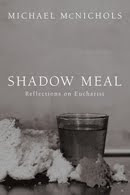
Maundy Thursday is the day that calls to the church’s memory the last meal that Jesus shared with his disciples prior to his arrest. It started out as a traditional Passover meal, but Jesus reframed it as he anticipated what was about to happen. We call that meal the Last Supper, but for us it really becomes the First Supper, one that the church has re-enacted for centuries. It now goes by different names—Communion, the Lord’s Supper—but the most traditional term is Eucharist, formed from a Greek word meaning thanksgiving.

I’ve always been fascinated, and sometimes perplexed, by the battles and boundaries that have emerged around the Eucharist. Christians have argued, divided, and even brought persecutions over the nature of the bread and wine. Most Christian groups have created boundaries designating who is eligible to participate in the Eucharistic celebration—boundaries that include church membership, baptism, right doctrine, proper confession of faith, and purity of heart.

It is interesting to me how both battles and boundaries seem to be absent from that original table of Jesus.

In the gospel accounts Jesus doesn’t offer much interpretation when it comes to the bread and wine. He simply declares, “This is my body,” and “This is my blood.” No one debates with him, even though such a reframing would change the meaning of the Passover elements. They seem to merely accept what he says at face value.

And while it’s true that the invitation was limited to his twelve disciples, they came as people sadly lacking in anything resembling solid doctrinal understanding, unity, or purity of heart. Around that table the disciples exhibited the weaknesses and sins that are common to all of us—fear, false expectations, cowardice, treachery. The one thing they all seemed to have in common was their response to the summons of Jesus. They wanted to be with him.

They came because he invited them.

I wonder if it is possible for us, with all of our weakness, our unbelief, our sin, our confusion, to begin to receive the elements of The Table in a new and fresh way. Rather than seeing ourselves as either qualified or unqualified, insiders or outsiders, good guys or bad guys, we start seeing ourselves as people sharing a common brokenness, yet still receiving Jesus’ invitation to come and dine. I wonder how that might change us.

There is a danger in this, I know. Some might come out of wrong motives. Some might not even be believers in Jesus. Others might be confused about orthodox faith. Still others could be harboring secret crimes. This can and does happen on a regular basis.

But when it does, we can take comfort in recognizing that each person still pulls up a chair and sits next to Peter, and Thomas, and Judas, and the others, and we can see that we’re all in good company. Like the original twelve disciples, we can only come to that table because Jesus has sent us his invitation.

And when Jesus calls, things change.

Wednesday, April 4, 2012

A Holy Week Reflection


In Christian tradition, Holy Week retells the story that begins with Jesus’ entry into Jerusalem and ends in Resurrection Sunday, or Easter.

But it’s really more than just a revisiting of an ancient narrative. It’s an intensely theological journey that speaks deeply about God’s initiating work of love in and through Jesus, for the sake of the world. In a way, this story summarizes God’s mission in the world.

On Palm Sunday, Jesus rides into Jerusalem on a donkey, inspiring misplaced hope, disillusionment, and disinterest. The ones crying “Hosanna” very likely anticipated a Messiah of their own design, one who would come in the kind of power that would expel the Romans and re-establish Israel as its own nation. Others would catch on, turning away from this would-be Messiah riding humbly on a donkey rather than galloping in with troops and weapons. The Romans seem to be disinterested, because they take no action against this peasant who seems to present no threat to the empire.

Palm Sunday shows that God’s intentions are played out in ways that are counter to what people anticipate. The work of God often scandalizes human expectation.

Monday, Tuesday, and Wednesday of Holy Week are considered days to reflect on a variety of events that lead up to Maundy Thursday, the day that commemorates what we have come to call The Last Supper.

At the table of Jesus on Maundy Thursday, Jesus engages his disciples, first of all, in a very human way—he eats with them. It’s a basic thing that human beings do. In that meal, Jesus shares a common humanity through a common meal. It is also a theologically symbolic meal in two ways. First, it is a meal that takes the symbols of the Jewish Passover and reframes them in what God is about to do in the death and resurrection of Jesus. Second, the meal is celebrated at a table that not only represents all of Israel (12 disciples, 12 tribes of Israel), but also represents the entire broken world that God loves. The disciples represent a humanity that is simultaneously devoted, confused, misdirected, cowardly, and treacherous. Yet they are all invited to Jesus’ table, regardless of their lack of pious qualifications.

On Friday Jesus experiences that which is inevitable for all human beings: Death. We recognize that in this death something more is happening than just the expiration of a life. Something in this death changes the landscape of the entire cosmos. Yet, on the surface, it appears that once again sin and death have had their way with another righteous person. And, indeed, they have.

Saturday is when all goes silent. It is the day of sadness and disillusionment. It is a day of doubts and heartbreaks. It is the place where the dark night of the soul is born. It is its own kind of sacred space, one which will, at one time or another, be inhabited by all. And yet it remains part of the week that we call Holy.

On Sunday the tomb opens and Jesus is raised from the grave. Sin and death did their work on Friday, but it was all undone on Sunday. Sin and death continue to do their work in the world, but it is clear that they do not have the last word. In the Resurrection of Jesus he is reborn, so to speak, by the Spirit and in him the people of God are reborn and relaunched into the world. In this new life is the possibility of new life for all, a life where hope trumps fear.

Holy Week is an atonement week, where the events of these last days sum up all that God is doing in the world. God fully identifies with us in the very human life, suffering and death of Jesus. God’s rescue mission for the world comes to us as God’s preferences and intentions rather than in the framework of military or political power. The table of Jesus shows God’s invitation to be broad and generous, preparing places for even the least of the righteous. And in the Resurrection we have new life, in this age and in the age to come.

May God richly bless you in this Holy Week. May the reality of what God has done in and through Jesus Christ be a story that reconstructs the story of your life, and through your new life may God bring blessing to all the families of the earth.